


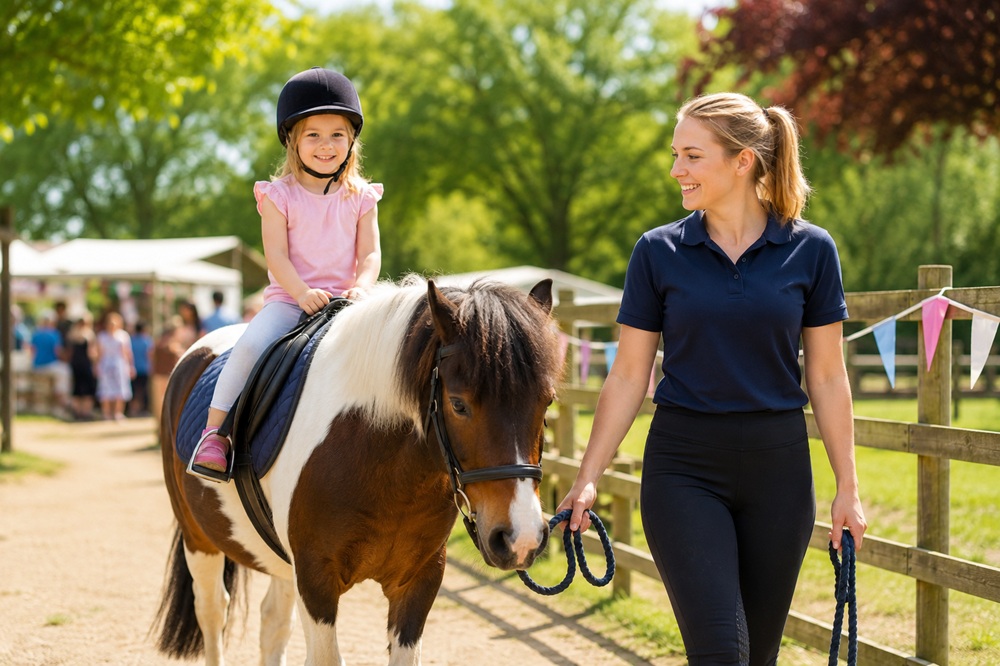
A pony ride can look like a very small adventure from an adult point of view, yet for a child it may be the first time they have sat on an animal, held the reins and seen the world from a saddle. That combination of novelty, movement and contact with an animal is part of what makes pony riding such a memorable outdoor activity. It can be enjoyed as a one-off experience, a birthday treat, a family day out or a gentle introduction before deciding whether regular riding lessons might be suitable.
Why pony rides make a good first experience
Unlike a full riding lesson, a beginner pony ride is normally designed to keep the experience simple. The pace is controlled, the route is suitable for novices and a handler remains close to the pony. That lets the rider concentrate on balance, confidence and the sensation of being around the animal rather than trying to learn several technical skills at once. For children who are excited but slightly nervous, that slower introduction can make all the difference.
There is also an educational side that is easy to overlook. Before a rider even gets into the saddle, they can begin learning how to approach a pony calmly, why sudden movements can startle animals, how riding hats are fitted and why instructions from staff matter. These small lessons encourage respect for animals and reinforce the idea that enjoyable activities still come with responsibilities.
Families comparing Pony Rides Essex options should check the practical details with the riding centre before travelling. Age limits, rider weight restrictions, session length, clothing requirements and availability can differ between venues. A centre may also change or postpone rides because of weather, ground conditions or the welfare of the ponies. Booking ahead is usually a better plan than turning up and assuming a ride will be available.
What to expect on the day
Most beginner sessions begin with a short safety briefing. Staff may explain how to stand near the pony, where to place hands and feet, and what the rider should do if they feel uncomfortable. The rider is then helped into the saddle, usually with the pony being led by an experienced member of staff. The exact format varies, but the aim is normally to keep the first experience calm, controlled and positive rather than fast or competitive.
Clothing does not need to be complicated, but practical choices help. Long trousers protect the legs from rubbing, and closed shoes or boots with a secure fit are preferable to sandals or loose footwear. Riding centres commonly supply an approved riding hat for beginners, although policies differ. Loose scarves, dangling accessories and anything that could catch on equipment are best avoided.
A few simple ways to make the experience easier
- Tell staff if the rider is nervous, has never been around horses before or has additional support needs.
- Arrive early enough for fitting equipment and listening to the safety briefing without rushing.
- Avoid promising a particular pony, route or session length because animal welfare and staffing may affect the plan.
- Encourage children to listen to the handler rather than a parent calling instructions from the side.
- Take photographs only when and where the riding centre says it is safe to do so.
Parents sometimes worry that a child will be frightened once the pony starts moving. That can happen, but it is not necessarily a failed outing. A good introduction allows the child to go at a manageable pace. Simply meeting, stroking or walking beside a pony may be enough for a first visit. Confidence around animals is often built gradually, and pushing a nervous rider to continue can turn an otherwise positive experience into something they remember for the wrong reason.
More than a photo opportunity
Pony riding encourages riders to use their body in ways that are different from everyday walking or sitting. Even at a slow pace, they have to respond to movement, maintain posture and pay attention to what is happening around them. For children, that can make the activity feel both exciting and absorbing. It is also a welcome change from screen-based entertainment because the experience depends on being present and interacting with a real animal and environment.
For some families, a short ride becomes the start of a longer interest in horses. A child who enjoys the experience may later progress to beginner lessons, stable-management activities or pony clubs. Others will simply come away with a good memory and a few photographs. Both outcomes are perfectly valid. The purpose of an introductory ride is not to create a future competitive rider; it is to provide a safe and enjoyable encounter.
Planning a relaxed family outing
If the ride is part of a larger day out, keep the timetable flexible. Outdoor equestrian activities do not operate with the same predictability as an indoor attraction. Ponies have individual temperaments, weather changes and busy yards sometimes need to adjust plans. Allowing a little spare time reduces pressure on everyone and makes it easier to follow staff guidance.
Pony rides can be simple, but that is exactly why they work so well as a first step. They combine fresh air, a manageable challenge and a chance to connect with an animal in a supervised setting. With the right clothing, realistic expectations and a reputable riding centre, a short session can become one of those childhood experiences that is talked about long after the day itself is over.

