



Introduction
Artificial Intelligence (AI) has rapidly evolved from a research discipline to a practical tool powering applications in every sector, from healthcare and finance to education and marketing. As large language models (LLMs) such as GPT-4 become more accessible, developers and data scientists are increasingly looking for ways to integrate them into real-world systems. One of the most effective frameworks for this integration is LangChain—a powerful open-source toolkit designed to simplify the development of AI-driven applications.
Whether you are a software engineer, machine learning enthusiast, or a student enrolled in a Data Science Course in mumbai, understanding how LangChain works can open the door to a wide range of intelligent application possibilities. This article explores how you can use LangChain to build AI-powered applications.
What Is LangChain?
LangChain is a framework that greatly simplifies the steps involved in building applications. It is driven by language models. Unlike using an LLM in isolation, LangChain allows developers to build context-aware, data-connected, and dynamic applications by linking LLMs with external tools such as APIs, databases, and user interfaces.
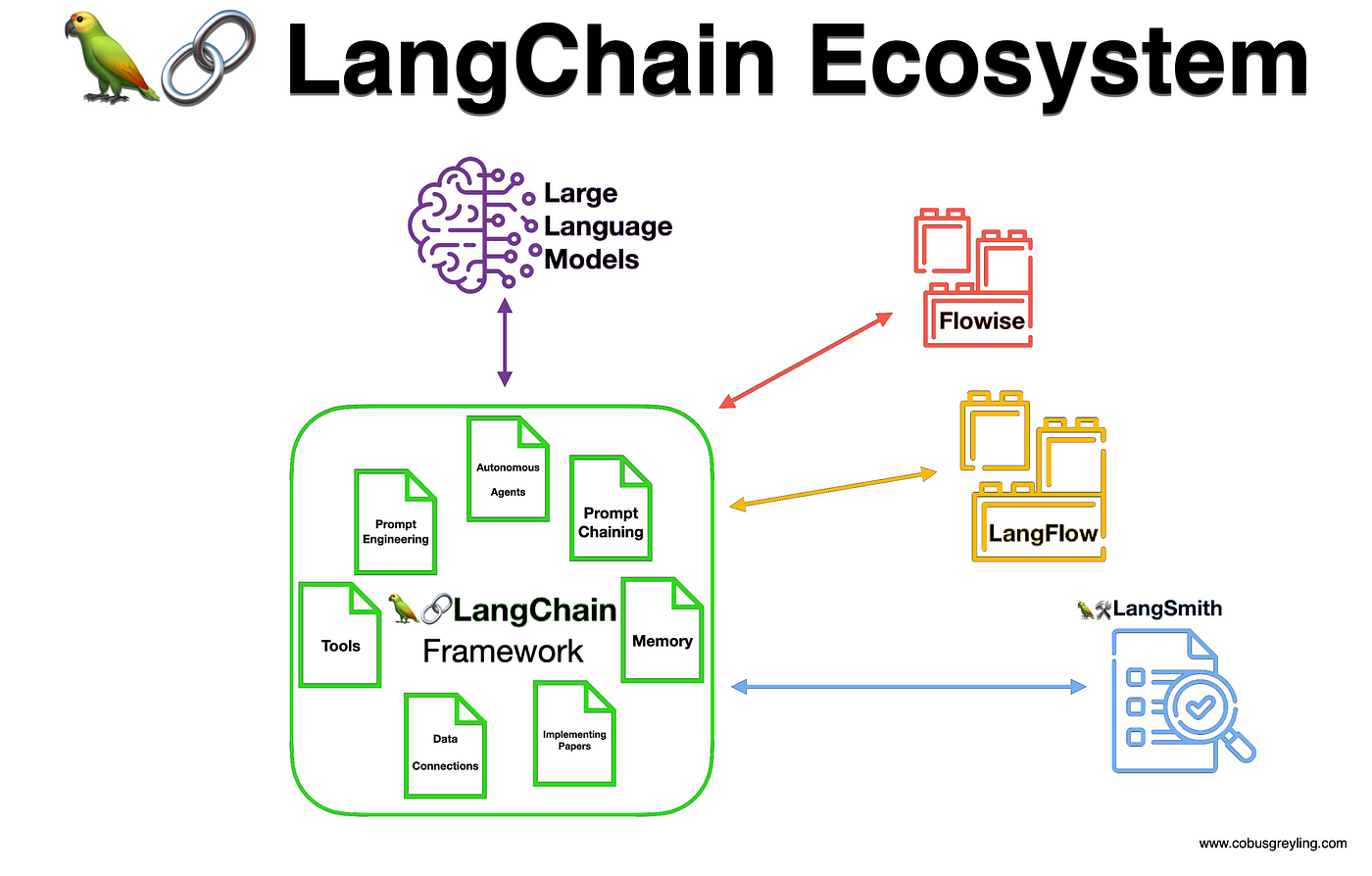
The primary value of LangChain lies in abstracting the common patterns involved in working with LLMs: prompt engineering, memory management, agent design, chaining of operations, and tool integration. LangChain allows you to orchestrate complex workflows, making creating conversational agents, chatbots, question-answering systems, and autonomous tools easier.
Core Components of LangChain
Following are the core components of LangChain:
LLMs (Large Language Models)
LangChain supports a wide range of LLMs, including OpenAI’s GPT models and Anthropic’s Claude, Cohere, and Hugging Face models. This makes it versatile across different providers.
Prompt Templates
Instead of writing raw prompts, LangChain enables the use of templates with dynamic variables, making prompts reusable and maintainable.
Chains
Chains are sequences of calls—where the output of one component becomes the input to the next. For example, a chain might take user input, summarise it, then feed it into a database query generator.
Memory
LangChain supports short-term and long-term memory management to keep track of user interactions, which is essential for building coherent and context-aware systems.
Agents
By using LangChain, agents can identify the actions to take and the order in which they must be performed. LangChain agents can interact with tools like search engines, calculators, or proprietary APIs.
Tools
Tools in LangChain extend the capabilities of agents by giving them access to external systems such as SQL databases, Python interpreters, or web scrapers.
Use Cases for LangChain
LangChain is particularly useful for developers and data scientists who want to build intelligent systems without reinventing the wheel. Here are some compelling use cases:
Conversational AI Agents
Using LangChain, you can build customer support agents that recall previous conversations, retrieve data from your CRM, and provide accurate responses.
Question-Answering Systems
LangChain can power document-based QA systems. For instance, a law firm can feed contracts into the system, allowing clients to ask legal questions and get answers directly from the source material.
Business Intelligence Tools
By combining LangChain with SQL connectors, you can create tools where users ask questions in natural language, and the system translates them into SQL queries to fetch insights from business databases.
Educational Assistants
Data science students can use LangChain to build AI tutors that help explain concepts like regression analysis, neural networks, or data visualisation in an interactive way.
Automation Agents
LangChain enables the creation of agents that can automate repetitive tasks—like scraping data, sending emails, or summarising reports—based on user prompts.
Setting Up LangChain
The following sections provide an overview of how you can start building an application with LangChain:
Installation
pip install langchain openai
You will also need API keys from providers like OpenAI to access their LLMs.
Basic Example
Let us look at a simple example: building a question-answering tool using OpenAI’s GPT.
from langchain.llms import OpenAI
from langchain.chains.question_answering import load_qa_chain
from langchain.document_loaders import TextLoader
llm = OpenAI(model_name=”gpt-4″)
loader = TextLoader(“document.txt”)
documents = loader.load()
qa_chain = load_qa_chain(llm=llm, chain_type=”stuff”)
response = qa_chain.run(input_documents=documents, question=”What is the summary?”)
print(response)
This snippet loads a document, processes it with a chain, and answers a query—no manual parsing needed.
Advanced Features and Integrations
LangChain is not just for small prototypes—it is built for production-ready applications. Here are some advanced capabilities:
Multi-Modal Support
LangChain supports combining text, image, audio, and video inputs, allowing richer interactions.
Retrieval-Augmented Generation (RAG)
RAG allows you to feed external knowledge (like PDFs, websites, or vector databases) into the language model, keeping it grounded and accurate.
LangSmith for Debugging and Observability
LangSmith is a companion tool by the creators of LangChain that lets you trace, visualise, and debug chains, which is vital for production systems.
Custom Tools and Agents
You can define your own tools in Python and connect them to LangChain agents. For instance, a data professional might build a tool to fetch Kaggle datasets, preprocess them, and summarise insights.
Why Use LangChain Over Other Frameworks?
While it is possible to use raw API calls to interact with LLMs, LangChain offers several advantages:
- Composability: Build modular pipelines that can be reused and extended.
- Context Handling: Memory and retrieval integration keep conversations coherent.
- Tooling Ecosystem: Built-in tools and integrations reduce development time.
- Open Source Community: Active contributors and frequent updates ensure long-term viability.
The versatility of LangChain lies in the fact that it offers a practical framework to apply theoretical AI concepts in hands-on projects, enhancing learning outcomes.
Best Practices for Building with LangChain
- Start Simple: To understand core functionality, begin with a single chain or agent.
- Use Prompt Templates: Avoid hardcoding text to maintain flexibility and clarity.
- Implement Logging: Use LangSmith or custom logs to monitor application behaviour.
- Secure API Keys: Store credentials securely using environment variables or secret managers.
- Test Incrementally: Debug chains step-by-step before deploying full workflows.
The Future of AI Applications with LangChain
As LLMs continue to improve, frameworks like LangChain will be key enablers for creating more intelligent, autonomous, and useful applications. The possibilities are endless, from virtual assistants and data analysers to autonomous research agents.
In fact, data science students are increasingly recognising the potential of LangChain in bridging the gap between AI theory and practical deployment.
LangChain is democratising AI development, allowing even those without deep ML expertise to build cutting-edge applications. Whether you are working on a startup, contributing to research, or simply exploring AI out of curiosity or fascination, LangChain is an indispensable tool in your development stack.
Conclusion
LangChain empowers developers to harness the full potential of language models by offering a structured, extensible, and production-ready framework. With components like chains, memory, and agents, it simplifies complex AI tasks, enabling the creation of robust and dynamic applications.
If you are exploring AI through a Data Scientist Course or working on your own innovative project, learning LangChain can substantially accelerate your development process and open the door to a wide range of practical applications.
The future of AI is not just in building smarter models but in building smarter systems, and LangChain is leading the way.
Business Name: ExcelR- Data Science, Data Analytics, Business Analyst Course Training Mumbai
Address: Unit no. 302, 03rd Floor, Ashok Premises, Old Nagardas Rd, Nicolas Wadi Rd, Mogra Village, Gundavali Gaothan, Andheri E, Mumbai, Maharashtra 400069, Phone: 09108238354, Email: enquiry@excelr.com.


